



 Facebook
 Reddit
Gabita is pregnant. Young, single, an ambitious student, and of limited means, she wants to have an abortion. Her friend Otilia vows to help her. In no time or place would this be easy to handle, but Gabita and Otilia live in Eighties Romania, where Nicolae Ceaucescu is in power. Every woman is required to serve the state by producing six children; abortion of any sort is illegal; and there are secret police everywhere.
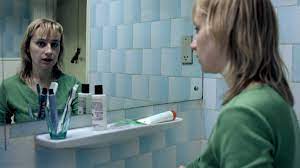
Every now and again, a film comes along which is almost too intense to bear. Like Takashi Miike's Audition, 4 Months, 3 Weeks & 2 Days takes hold of the audience and never lets go. It doesn't flinch; it doesn't look away; it forces each viewer to go through the girls' horrific experience with them, step by step. Who can they trust? What does the abortionist want from them? What will they do if Gabita starts bleeding dangerously? Seemingly more and more powerless at each stage, they travel through their nightmare only just clinging to the bond which they shared to begin with, but that bond is reinforced for Otilia as her encounters with male callousness prompt her to question her place in the world. Although the story is set in a notoriously oppressive regime, it raises questions about the treatment of women worldwide and, ultimately, about how we all relate to one another as human beings.
 In the leading role of Otilia, Anamaria Marinca is a revelation, staying focused and keeping viewers with her no matter what happens. She is strong without becoming inscrutable, capable without ever ceasing to seem vulnerable. She is absolutely believable. This performance is balanced perfectly by Laura Vasiliu's as Gabita, withdrawn to the point of grotesque selfishness, unable to fully comprehend anything beyond her own distress.
4 Months, 3 Weeks & 2 Days doesn't take a political position on abortion as such, and dosn't require the viewer to do so. If it seems in places to suggest that it's essential to women's rights, this is balanced by the image of a dead foetus, brutal and difficult to forget. There is no attempt made, however, to balance its condemnation of Ceaucescu's ban on contraception. The film is grim throughout, visually as well as in its subject matter; the only sparks of beauty, the only hints of pleasure, come when we see young people getting dressed up to dance and have fun and flirt. It's clear that Gabita wasn't the only one having pre-marital sex; she was just unlucky.
This film has been winning awards at every festival where it's been shown, and rightly so. It's an incredibly powerful piece of cinema, but unfortunately I can recommend it only for those who are prepared to be utterly depressed afterwards.
Reviewed on: 08 Jan 2008

If you like this, try:
Review preview for Buy It Now
Buy It Now is rare in being a film about teenagers which portrays them realistically and manages to do so without being offensive to a young audience.
Review preview for The Death Of Mr Lazarescu
A reminder of what it was like when writer/directors had the freedom to be truthful without fear of being shut down by penny-pinching producers.
Review preview for Vera Drake
Once again, the power of Leigh's films derives primarily from his obsessive attention to detail.